
Why This Comes First
Trust is the whole product
Working Americans have been burned before — by institutions that talked like neighbors and operated like black boxes. Money went in; explanations never came out. We think the erosion of trust in civic life traces straight back to that opacity, and we refuse to add to it.
So we're building the disclosure habit before we build anything else. Before the first dollar is accepted, our commitments will be in writing and in public. Not because a regulator makes us — much of what we're pledging goes beyond what the law requires of nonprofits — but because an organization owned by its members has no business keeping secrets from them.
Our test for every disclosure decision is simple: if a member drove an hour to our annual convention and asked to see it, would we show them? If the answer is yes, it goes on this page. If the answer is no, we need a better answer than "that's private."
The Commitments
What we will publish
Once operational, these disclosures will live on this page, updated on a regular published schedule. This is the standing list — members can vote to expand it, never to shrink it.
- Annual budget
- The full operating budget for each year, published before the year begins — what we plan to spend, on what, and why.
- Audited financials
- Independent annual financial statements, posted in full alongside our IRS filings, so members never have to take our word for the numbers.
- Board meeting summaries
- A plain-English summary of every board meeting: what was decided, how directors voted, and what comes next.
- Executive compensation
- The compensation of every executive and every director, published by name and role. No ranges, no footnote-burying.
- Member counts
- Real membership numbers, updated on a published schedule. We will never inflate, round up for effect, or quote a count we can't back.
- Funds raised and spent
- Running totals of money in and money out, broken down by program — advocacy, education, chapters, operations — so members can see where every dollar went.
- Active campaigns
- A current list of every advocacy campaign we're running, what it costs, and what outcome we're pursuing — so no member is ever surprised by what's done in their name.
- Ethics and conflict policies
- Our ethics policy and conflict-of-interest policy, published in full, with a log of any disclosed conflicts and how the board handled them.
Current status: in formation. Nothing has been raised and nothing has been spent. The first disclosures will be posted here before we accept the first dollar.
The Legal Structure
Built in two parts — with one deliberate omission
Our structure is designed so the mission can't quietly drift. Two entities, clear jobs, and a bright line we will not cross.
501(c)(4) — the parent
120K or Less America is being organized as a 501(c)(4) social welfare organization. It runs membership, advocacy, legislative education, and the campaigns members vote for. This is the entity you join.
Honest note: contributions to a 501(c)(4) are not tax-deductible as charitable gifts. If you give here, you're funding advocacy — and we'll say so plainly every time we ask.
501(c)(3) — the foundation
A separate educational foundation will handle the charitable work: scholarships, financial literacy, and civic education. Its money and its mission stay walled off from advocacy, with separate books and separate reporting.
Honest note: gifts to the foundation are expected to be tax-deductible once the IRS grants its 501(c)(3) recognition — and we won't describe them that way a day before that recognition exists.
No political committee. Ever.
We will not form a PAC, endorse candidates, or move money to campaigns. This is a structural promise, not a mood: it keeps us nonpartisan in fact, not just in tone, and it means no politician can buy us and no party can borrow us.
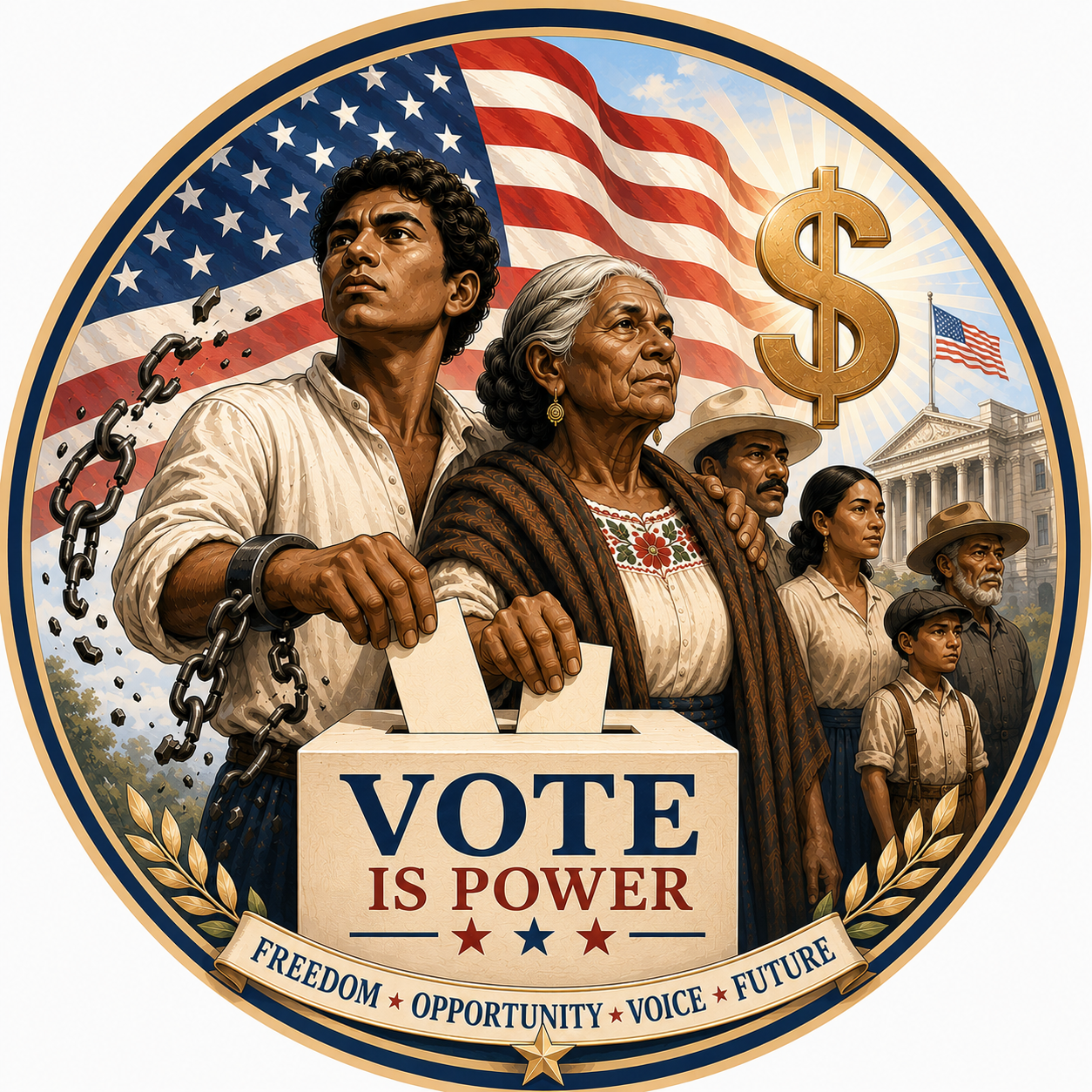
Our power is different: an informed membership that shows up. Vote is Power — the member's vote, not our checkbook.
Governance Commitments
Accountability is written into the bylaws
Ethics policy
Every director, executive, and chapter leader signs it. Violations are reviewed by the board and the outcome is disclosed to members.
Conflict of interest
Directors and executives disclose financial interests annually. Anyone conflicted on a decision recuses — and the recusal is recorded in the published meeting summary.
Member votes
Major decisions — platform changes, dues-free membership, disclosure standards — go to the membership. Leadership can propose; only members can ratify.
Our Word, In Writing
The accountability pledge
We pledge, to every member and every American watching: we will publish our budget, our audited financials, our leaders' compensation, our real member counts, and every dollar raised and spent. We will summarize every board meeting in plain English. We will never invent a statistic, inflate a number, or claim support we do not have. We will never form a political committee or endorse a candidate. And if we ever fall short of this pledge, members will hear it from us first — with the facts, the fix, and the name of the person responsible for making it right.
This pledge will be ratified by the founding membership and printed in our governing documents. Amending it will require a member vote.
Questions about our structure, our filings, or anything on this page? Ask us directly — transparency includes answering the mail. You can also read the FAQ or see who we are and how members own the movement.
Hold Us To It
Join the movement
The best oversight is a membership that's paying attention. Join free, get the numbers as we publish them, and help set the standard for what an honest movement looks like.
Opens at national launch